PRESS RELEASE: When and Why to Choose MCI®-2026 Floor Coating for Concrete Longevity

Extending concrete service life takes a multi-faceted approach, but the underlying principles are always the same: (1) properly understand the conditions and environment, (2) select the appropriate treatment, and (3) apply the chosen solution properly for best results. Many outstanding options exist in Cortec’s line of MCI® Technologies, but not all treatments are equally suited to every application. It is therefore important to know when and why to choose a product such as MCI®-2026 Floor Coating for concrete longevity.

 Choosing the Right Product for the Application
The first step in selecting a product to extend service life is considering the structure and its environment. For example, an engineer planning a new parking ramp in a harsh winter environment where deicing salts are used could extend service life by specifying Migrating Corrosion Inhibitor admixtures for the concrete mix. Workers performing concrete repairs can help the repair last longer by incorporating MCI® Mini Grenades into repair mortars. Facility managers can ward off corrosion on existing structures through periodic application of surface applied corrosion inhibitors (SACIs) such as MCI®-2020. While these products could also be used for concrete floors, often the biggest concern in an industrial environment is the risk of external concrete damage from heavy traffic and exposure to harsh chemicals. It is chiefly after this kind of damage that corrosion is more likely to occur by allowing corrosives to enter the substrate. MCI®-2026 Floor Coating is an excellent first line of defense against these problems.

Benefits of MCI®-2026 Floor Coating
There are three main areas where MCI®-2026 Floor Coating is especially helpful:

  • Applications with strict VOC limits
  • Federally inspected plants
  • Areas with heavy traffic and/or chemical spillage

MCI®-2026 Floor Coating addresses the first concern by being a 100% solids, two-component novolac epoxy coating with zero VOCs. This is perfect for maintaining VOC compliance and is a great advantage for workers applying the coating. In the second case, MCI®-2026 meets all USDA/FDA guidelines for use in federally inspected facilities. In regard to the third case, MCI®-2026 Floor Coating achieves a high degree of physical and chemical resistance while maintaining excellent adhesion to properly placed primers. In so doing, it protects concrete surfaces from aggressive industrial environments and prevents the intrusion of corrosive elements that would cause further concrete deterioration at the reinforcement level. MCI®-2026 Floor Coating can be used alone as a body/basecoat or as a topcoat if additional internal moisture resistance is needed by priming the floor below.

Best Practices for Good Concrete Coatings Performance
Next in importance to choosing an appropriate technology is applying it properly. As for any coating, good surface preparation is critical to ensuring the best performance possible. Before applying MCI®-2026 Floor Coating, workers should make sure that the concrete floor is clean and sound with a minimum surface profile of CSP-2. Existing coatings should be removed to ensure proper adhesion. As a two-component product (a feature that allows crosslinking for an overall stronger coating chemistry), MCI®-2026 Floor Coating should be properly mixed and applied at the right temperatures per manufacturer’s instructions to work as designed.

Choosing Physical and Chemical Durability for Concrete Floors
By choosing to apply MCI®-2026 Floor Coating, facility owners and managers are left with concrete floors with a high degree of physical and chemical resistance. These qualities make the floor more durable and help it last longer primarily by protecting against physical and chemical damage and secondarily by blocking the intrusion of corrosives in an aggressive environment. All this is achieved with a low VOC coating that can be used in federally inspected facilities. Contact Cortec® to see if MCI®-2026 Floor Coating is the right choice for your industrial concrete floor application: https://www.cortecmci.com/contact-us/.

Keywords: Cortec, From Grey to Green, MCI, extend service life, concrete deterioration, concrete damage, low VOC coatings, concrete longevity, concrete coatings, concrete floor durability

Need a High-Resolution Photo? Visit: www.cortecadvertising.com

For a PDF version please click here.

PRESS RELEASE: Prevent Corrosion—Save Money in Wastewater Treatment Plants!

AdobeStock 275291949 1 scaled

Tank or reservoir for biological purification and cleaning of dirty sewage water by active sludge. Modern technologies in wastewater treatment plant, toned

Wastewater treatment environments are one of the most corrosive industrial settings around. Constant exposure to moisture, harsh chemicals, and corrosive gases such as H2S pose an ongoing threat to facility components, equipment, and structures. With today’s increasing reliance on technology, electronics protection is especially critical. Recent experience has shown that the strategic use of simple Cortec® VpCI® Technologies can have a huge direct cost savings with many peripheral benefits.

Protect Wastewater Treatment Electronics

While corrosion of wastewater plant electronics is one of the most obvious problems, it is also one of the easiest to prevent. An excellent example comes from a wastewater treatment operation in the upper Midwest (U.S.) that was experiencing one to two HMI (human machine interface) failures every six months. The HMIs were used to control pump stations throughout the city and cost $15,000-$40,000 to replace, plus the indirect costs of downtime and repair.

Cortec’s representative easily fixed the problem with VpCI® Technology and Corrosorber®. VpCI®-111 Emitters placed inside the control boxes conditioned the enclosed atmosphere with Vapor phase Corrosion Inhibitors while Corrosorber® cups absorbed excess hydrogen sulfide gas. ElectriCorr VpCI®-239 provided another layer of corrosion protection. The plan included regular inspection and yearly reapplication, as needed.

In just one year, the city wastewater department saved an estimated tens of thousands of dollars at a tiny fraction of HMI replacement cost by avoiding any HMI failures. A similar solution had been previously used at another wastewater treatment operation for at least ten years. The result was a significant decrease in electronic and electrical failures in deep pumping stations, despite the corrosive atmosphere. 

Protect Wastewater Treatment Structures

The corrosive environment also takes a toll on treatment plant structural elements such as railings, walkways, and tanks. While prevention is ideal, existing structures may already have rusty surfaces that need to be addressed before further anticorrosion coatings are applied. A much easier solution than sandblasting is to passivate the rust with CorrVerter® Rust Primer. CorrVerter® uses chelating agents and a high solids waterborne latex to convert the rust into a hydrophobic passive later and protect it against further rusting. This lays a good foundation for applying heavy duty anticorrosion primer/topcoat combinations such as VpCI®-395 or VpCI®-396 with VpCI®-384.

Reinforced concrete structures can also be protected from corrosion with MCI®, which delays time to rebar corrosion and reduces corrosion rates once started. The best way to extend concrete service life is by applying MCI® admixtures to the concrete structures when first poured. However, since many wastewater treatment plants already exist, it is more likely that concrete tanks, walkways, and various concrete structural elements will be candidates for MCI® surface applied corrosion inhibitor (SACI) application. Enhancing concrete longevity in this way will have a huge benefit simply by reducing the need for concrete repairs and the extensive downtime required for work to be done.

A Little Goes a Long Way

Corrosion issues will always be present in wastewater treatment plants. The good news is that basic precautions to prevent or reduce wastewater treatment plant corrosion can go a long way toward longer service life and fewer costly repairs and replacements. Contact Cortec® to discuss specific VpCI® solutions for your facility: https://www.cortecvci.com/contact-us/

Cortec® also supplies biological solutions to promote efficiency and restore balance in wastewater treatment processes through its subsidiary Bionetix® International. Learn more at:

https://www.bionetix-international.com/waste-treatment/.

Keywords: prevent corrosion, wastewater treatment plant corrosion, electronic failures, concrete repairs, anticorrosion coatings, corrosion issues in wastewater treatment plants, surface applied corrosion inhibitors, SACI, Cortec, VpCI

Need a High-Resolution Photo?  Visit: www.cortecadvertising.com

Cortec® Corporation is the global leader in innovative, environmentally responsible VpCI® and MCI® corrosion control technologies for Packaging, Metalworking, Construction, Electronics, Water Treatment, Oil & Gas, and other industries.  Our relentless dedication to sustainability, quality, service, and support is unmatched in the industry. Headquartered in St. Paul, Minnesota, Cortec® manufactures over 400 products distributed worldwide.  ISO 9001, ISO 14001:2004, & ISO 17025 Certified. Cortec Website: http://www.cortecvci.com Phone: 1-800-426-7832   FAX: (651) 429-1122

For a PDF version please click here.

PRESS RELEASE: MCI®-2044: An Exciting Addition to Cortec’s ‘Mix’ of MCI® Concrete Repair Solutions

AdobeStock 73622535 scaled

Cortec® MCI® is in the business of helping concrete structures last longer. In order to properly extend service life, a good repair strategy must account for the workings of corrosion, a natural process that is too often the culprit of concrete deterioration. Contractors and engineers must not only consider the possibility of recurring corrosion, but also the danger of corrosion spreading to adjacent concrete through the insidious ring anode effect. Cortec’s MCI® HPRS® (High Performance Repair System) addresses these very problems and has recently expanded to include MCI®-2044 Self-Consolidating Concrete Mix for greater repair flexibility.

MCI® for Longer-Lasting Concrete Repairs
The power of MCI®-2044 is its Migrating Corrosion Inhibitors, which work their way through concrete to form a protective molecular layer on embedded rebar. The MCI® molecules delay corrosion and reduce corrosion rates once started, helping the concrete patch last longer. Using MCI®-2044 in a concrete repair also helps protect against the ring anode effect. This halo effect takes place when the high pH of new concrete creates a difference in corrosion potential between patch materials and old concrete, inadvertently causing corrosion to spread to and accelerate in adjacent areas. MCI®-2044 helps even out the corrosion potential to reduce the risk of ring anode problems and make the repair more durable.

Enhanced Flexibility for Repair Contractors
In addition to making repairs more durable, MCI®-2044 offers contractors greater flexibility and versatility when implementing the MCI® HPRS®. In the past, Cortec® was only able to offer MCI® enhanced repair mortars for vertical and overhead use. With MCI®-2044, contractors now have an MCI® enhanced concrete mix for use in form and pour applications. MCI®-2044 is self-leveling and self-consolidating with a slump/flow of 24-30 inches (61-76 cm). As a single component mix containing factory blended coarse aggregate, it is convenient to use and eliminates the need for extending material in the field. As a further side benefit, there are no chlorides, magnesium phosphates, or calcium nitrites included in the mix.

Where to Use MCI®-2044
MCI®-2044 can be used in any form and pour repair applications from 1-8 inches (25-200 mm) deep, including horizontal, vertical, and overhead applications. It is ideal for full-depth and large volume repairs in practically any concrete structures

  • Parking garages
  • Bridges
  • Industrial, residential, and commercial buildings

It’s Time to Add MCI®-2044 to the ‘Mix’ of HPRS® Solutions
Concrete repairs are constantly needed around the world, especially in areas of harsh marine or winter environments. Given the counterproductive danger of the ring anode effect to simply shift corrosion elsewhere, it is important to build corrosion protection directly into the repair. With MCI®-2044, contractors and engineers now have a self-consolidating concrete mix to enhance the durability of their form and pour applications. Contact Cortec® today to start implementing the power and convenience of MCI®-2044 into your MCI® HPRS® repair: https://www.cortecmci.com/contact-us/

To learn more about MCI®-2044, please visit: https://www.cortecvci.com/wp-content/uploads/MCI-2044.pdf

Keywords: Cortec, MCI, From Grey to Green, concrete repair, self consolidating concrete mix, Migrating Corrosion Inhibitors, ring anode effect, MCI HPRS, High Performance Repair System, extend service life

Need a High-Resolution Photo? Visit: www.cortecadvertising.com

For a PDF version please click here.

PRESS RELEASE: Reduce Your Concrete Carbon Footprint with Cortec® MCI® Technology!

concrete greenhouse gas emissions, sustainable construction, carbon footprint, CO2 emissions, concrete admixtures, Cortec, MCI, Migrating Corrosion Inhibitors, LEED certification, From Grey to Green


Concrete is the world’s most widely used construction material—and also one of its greatest contributors to greenhouse gas. The root cause is cement production, which alone accounts for approximately 8% of global COemissions. At this rate, successful strategies to lower concrete carbon output are especially significant. MCI® Technology is one of those simple but powerful strategies that helps the construction industry take a pivotal step toward a smaller carbon footprint.

Using MCI® Technology to Extend Concrete Service Life

How can MCI® Technology help lower carbon emissions? The answer lies in its ability to enhance concrete durability. Ashraf Hasania, Cortec’s MCI® Technical Sales and Product Manager, who holds degrees in civil and environmental engineering, explains the common-sense logic: “Increasing the service life of concrete structures using durable materials can reduce the need for demolishing old structures and building new ones. It can also lead to less need for major repairs. This lowers the carbon footprint of concrete structures and promotes sustainable practices.”

The way MCI® helps concrete structures last longer is by attacking one of the biggest enemies to concrete durability: corrosion of metal reinforcement. As rebar rusts due to carbonation, chloride exposure, and other environmental conditions, it expands and puts pressure on the concrete cover. This leads to cracking, spalling, and a vicious cycle of further exposure to corrosives and additional damage. Based on salts of amine carboxylates, MCI® Technology interrupts this process by migrating through the concrete pores to form a protective molecular layer on the rebar surface to delay and reduce corrosion. Service life models and lab and field studies have shown that MCI® can increase service life by three to four times. This translates into a comparable reduction in concrete’s carbon footprint.

When Can MCI® Be Used?

MCI® can be used at any stage in a structure’s lifecycle, but the best course to pursue is early treatment. “Sustainability in construction starts early in the process,” Hasania advises, “specifically in [the] design phase with careful selection of construction materials and concrete mixes.” Ideally, this includes the choice of MCI® concrete admixtures, which can be added to new concrete at the ready-mix plant or construction site. In contrast to calcium nitrite admixtures, MCI® admixtures have a low dose independent of chloride loading and do not negatively affect concrete mix properties. Existing structures can be treated with MCI® in the form of surface applied corrosion inhibitors (with or without water repellent) and repair mortars. Once applied, the MCI® molecules migrate through concrete pores to protect embedded rebar in sound concrete, or to even out corrosion potential and interrupt the problematic ring-anode/halo effect between new patch repairs and old concrete.

Other Sustainability Features

In addition to the main goal of helping concrete structures last longer, MCI® Technology offers other attractive features. For example, MCI®-2005 is a USDA Certified Biobased Product that contains 67% USDA certified biobased content. This use of renewable resources can help the project earn credits toward LEED certification while adding a more sustainable image to the structure and builder. Another attractive feature is the low toxicity of MCI®
products, many of which are certified to meet NSF Standard 61 for use in potable water structures.

Take a Step Toward Sustainable Construction

Considering the costs of construction and rebuilding alone, the benefits of extending concrete service life are clear. Add to it the ripple effect of decreasing the amount of new cement needed to repair and replace old structures, and the advantages of MCI® Technology go even further—helping the construction industry take major steps toward a smaller carbon footprint and a more sustainable future. Learn more about sustainability with Cortec® MCI® today: https://www.cortecmci.com/sustainability/

Keywords: concrete greenhouse gas emissions, sustainable construction, carbon footprint, CO2 emissions, concrete admixtures, Cortec, MCI, Migrating Corrosion Inhibitors, LEED certification, From Grey to Green

Need a High-Resolution Photo? Visit: www.cortecadvertising.com

For a PDF version please click here.

Cortec® Releases Quick Start Guide on Direct to Metal Coatings for Construction Applications

AdobeStock 68885304 scaled

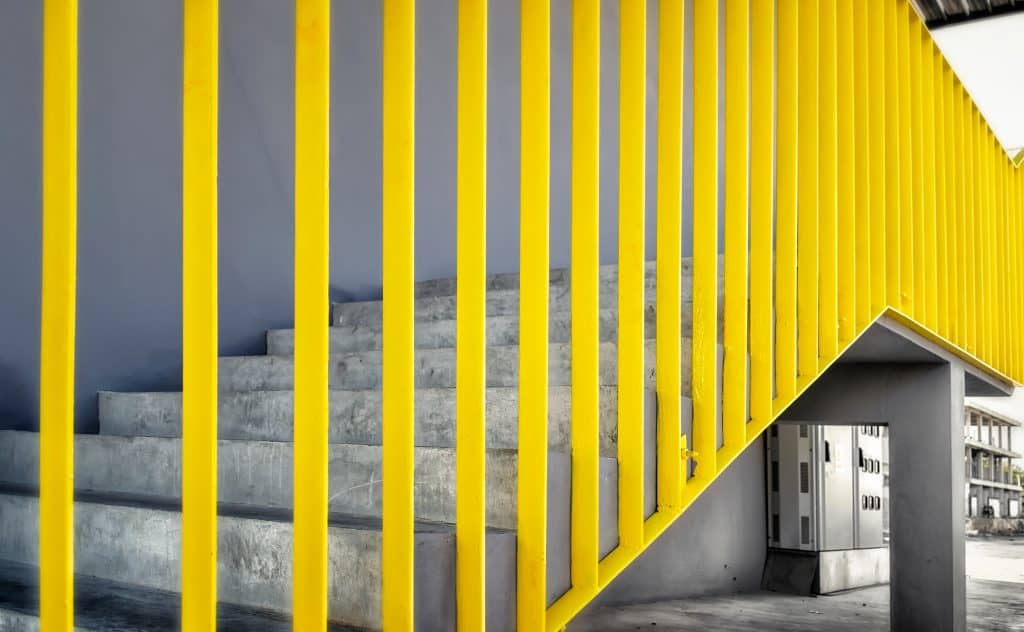
Painted Yellow Guard Rails on a Staircase mci cortec coatings

Cortec® MCI® is pleased to release a new coatings guide designed specifically for the building maintenance and construction industries. This two-page handout gives a quick intro to Cortec® Micro-Corrosion Inhibiting Coatings™ Technology before getting down to basics on how and where to apply which coatings. The guide is here to help engineers, contractors, and maintenance crews easily protect structural steel and metal equipment around their facility or construction site.

Why Coat Metal?
Construction sites and facilities have countless metal structures or equipment components that need protection—from structural steel to steel plates, from metal platforms to stairs and banisters, from metal HVAC components to decorative architecture. Depending on the surrounding environment (e.g., outdoors vs. indoors), some will be at higher risk of corrosion and require heavy duty protection. Others may need a simple layer of paint to improve appearance and delay gradual oxidation. This quick guide helps simplify coatings selection so workers can get down to the business of protecting their assets with a good coating combo for each specific application.

How Should Metal Coatings Be Applied?
The new guide briefly outlines a critical part of coatings success—how to properly apply a system. For best results, this includes good surface prep (e.g., rust removal), optional rinsing, and the final application of a primer plus one or more topcoats. The actual number of coatings chosen can depend on the durability and aesthetics required on a case-by-case basis. One of the nice things about Cortec® Coatings is that many can be applied directly to metal, and some can function as metal primers, topcoats, or even intermediate coats for more flexibility. The brochure includes a full coating system application example to show how this might be done.

What Features Does Each Coating Have?
Another important part of the new construction coatings guide is the listing of specific features for each primer and topcoat. These characteristics can
mean the difference between which coating will be used inside versus outside, in a strong chemical processing environment versus a dry warehouse, and so on. Some workers will place the most importance on low VOC or water-based coatings. The one- or twopart nature of the system can also factor into the equation, as some users want to go quick and easy with 1K coatings, while others desire to benefit from the cross-linking advantages of a 2K coating.

Where Should Each Coating Be Used?
The best part of the coatings guide is that it brings all the coatings together with a comprehensive chart of recommended system combinations for different applications. This is a great reference when workers know what kind of equipment or structural steel they need to coat but feel at a loss navigating through all the different coatings characteristics to choose the right coating on their own. For those who want a simple answer to the question, “Which coating should I use right here?” this selection guide is a great place to turn immediately. It offers multiple primer/topcoat combinations that go well together and specific examples of where they can be used:

  • Clean structural steel
  • Rusted structural steel
  • Chemical exposure environment
  • Handrails, banisters, steel plates, and mechanical equipment
  • Pipes

The Brainwork Has Been Done – Now Enjoy!
Cortec® seeks to develop products and resources that will improve the ease and efficiency of everyday corrosion protection tasks. The new coatings
guide is a great example and will be a tremendous boost for construction and maintenance workers who need to make a quick decision on protecting metal components without having to become coatings experts themselves. Cortec
® has done the work to make coatings selection easy and positive. Take advantage of those efforts today by browsing “Cortec’s Coatings Guide for Construction Applications” here: https://www.cortecmci.com/mci-coatings-guide-for-construction-applications/

Keywords: Cortec Coatings, direct to metal coatings, corrosion inhibitor coatings, corrosion protection, how to apply a coating, metal primers, low VOC coatings, water-based coatings, construction industry coatings, building maintenance

Need a High-Resolution Photo? Visit: www.cortecadvertising.com

For a PDF version please click here.
Get Ready to Take a Fresh Look at High Performance Concrete Repairs!

CorrVerter Application

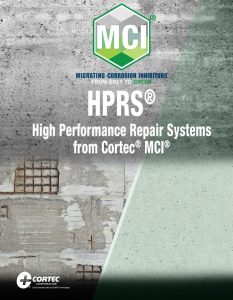
Cortec® is pleased to announce a fresh new look to its MCI® HPRS® brochure! The acronym HPRS® stands for “High Performance Repair Systems,” which use MCI® Technology to enhance the durability of concrete repairs. By following the recommendations of the updated MCI® HPRS® brochure, engineers, contractors, and DOTs can take a path to longer lasting repairs and extended concrete structural service life.

Enhance Concrete Repair Durability
The MCI® HPRS® brochure starts with a brief overview of MCI® Technology, centered on the action of Migrating
Corrosion Inhibitors. These are able to diffuse throughout concrete pores in liquid and/or vapor form to protect anodic and cathodic areas of embedded metal reinforcement. MCI
® forms a protective molecular layer on metal surfaces and significantly reduces corrosion rates, leading to a longer service life for the structure.

Combat the Ring-Anode Effect
Next, the brochure explains how MCI® evens out the corrosion potential between areas of new and old concrete to combat the insidious ring-anode effect. This problem arises because of the relatively higher pH and resistivity of new patch areas compared to old concrete. The difference in corrosion potential causes corrosion to accelerate in concrete adjacent to the repair. MCI® migrates to these surrounding areas to minimize the halo effect.

Concrete Repair Instructions
After a brief description of each HPRS® component, the brochure lists updated step-by-step instructions on how to include MCI® in
a concrete repair:

1. Prepare the Substrate
2. Treat and Clean Rusted Rebars
3. Application of Repair Materials
4. Surface Applied Corrosion Inhibitor Application
5. Final Coating

Each step identifies which HPRS® components should be used and where it should be applied after the substrate has been properly prepared in Step 1. For example, CorrVerter® MCI® Rust Primer is recommended for passivation of rusted rebars under Step 2. Step 3 summarizes the use of MCI®-2039 repair mortar for horizontal repairs, MCI®-2040 repair mortar for vertical and overhead repairs, and MCI®-2044 concrete mix for
form and pour applications. Step 4 identifies two surface applied corrosion inhibitor options—either MCI
®-2020 as a pure corrosion inhibitor for extra protection on the cured patch, or a two-in-one MCI® water repellent / surface applied corrosion inhibitor for repairs where no membrane or coating system will be used. Step 5 recommends MCI® EcoRainbow® Architectural Coating as a final coat over surface applied corrosion inhibitors to seal out water and carbonation while providing a great finished look.

Implement the Latest MCI® HPRS® Strategy
Ultimately, concrete repair is a necessary fact of life. Fortunately, contractors, DOTs, and engineers can go a long way toward maximizing the durability of their concrete repair through strategic use of the tips and materials outlined in the latest MCI® HPRS® brochure.
Browse the updated brochure today for fresh ideas: 
https://www.cortecmci.com/wpcontent/uploads/2022/01/HPRS_01-2022_red.pdf

Keywords: Cortec, MCI, concrete repair, ring anode effect, halo effect, rusted rebar, repair mortars, water repellents, surface
applied corrosion inhibitors, Migrating Corrosion Inhibitors

Need a High-Resolution Photo? Visit: www.cortecadvertising.com

For a PDF version please click here.
PRESS RELEASE: MCI® Grenades – Your Concrete Corrosion Inhibitor Backup Plan for Worst-Case Ready-Mix Scenarios

AdobeStock 246358831 scaled

Picture this scene. You are a project superintendent in the middle of a stressful concrete pour. The engineer has specified Cortec® MCI® as the corrosion inhibiting admixture. So far, all has gone well with no early set problems. In fact, the mix has never been easier to work with! Then suddenly, the admixture dosing equipment starts to clog. Bad goes to worse when someone sends word that there are no more drums of MCI® admixture onsite to finish the batch even if the dosing equipment were fixed. Fortunately, this nightmare does not have to come true thanks to a simple backup plan of MCI® Grenades.

A Powerful Dose of Migrating Corrosion Inhibitors
MCI® Grenades are pre-packaged water-soluble pouches of MCI®-2006 NS that can easily replace MCI®
2005/MCI
®-2005 NS liquid admixtures if needed. MCI® Grenades are extremely convenient, pre-dosed to treat one cubic yard of concrete per bag (one cubic meter per Metric MCI® Grenade). As Jon Connealy, Regional Sales Manager for MCI® Central and one of ICRI’s 2020 “40 under 40,” explained, “Simply toss one grenade into your concrete truck per yard of concrete enclosed and your concrete will have all of the migrating corrosion inhibitors needed.” This serves as an affordable backup plan for ready-mix providers who must always be on guard for unexpected liquid admixture dosing challenges that could devastate an already stressful situation.

MCI® Admixture ‘Insurance Plan’ in Action
Connealy shared a case in point of how one ready-mix provider wisely prepared for a worst-case scenario after falling short for another. In the summer of 2021, the ready-mix provider was in the middle of a batching job when realization hit that there was not enough MCI®-2005 NS to complete it. Additional MCI®-2005 NS would not arrive for a week. Earlier in the year, the ready-mixer’s dispensing unit pump had become blocked with foreign materials and delayed the project for both the ready-mixer and the contractor. As a result, the ready-mix provider had stocked MCI®-2006 NS (approved by the engineer) as a backup supply in case the problem happened again. When the summer batching shortage hit, the crew was able to carry on with MCI®-2006 NS while waiting for the rest of the MCI®-2005 NS to arrive. As Connealy noted, “This ‘insurance plan’ saved them and the
contractor serious delays for the job.”

Convenient Options for Best-Case Scenarios
Worst-case scenarios aside, MCI® Grenades are a convenient option for contractors even when nothing is going wrong. MCI® Grenades are easy to work with for small jobs. They can be added onsite and safely handled despite their high pH since they are packaged in watersoluble film that does not dissolve until mixed with water. Furthermore, MCI® Grenades make MCI® admixtures accessible to all contractors—even if not ready-mix suppliers—who can simply calculate the right number of MCI® Grenades to toss into the concrete batch at the jobsite to get corrosion protection and extend service life.

Be Prepared with an MCI® Grenade™ ‘Insurance Policy’
While unexpected MCI® supply and dosing equipment problems can happen, they do not have to be added to the already stressful task of achieving a good concrete pour. By simply keeping a backup supply of MCI® Grenades on hand for unpredictable problems, concrete suppliers and contractors can make sure they do not end up in a ready-mix nightmare. Contact us to order your MCI® Grenades today: https://www.cortecmci.com/contact-us/

Keywords: ready mix suppliers, concrete admixtures, concrete corrosion inhibitors, Cortec, MCI, Migrating Corrosion Inhibitors, extend service life, ready mix problems, concrete contractors, MCI Grenade, supply shortage

Need a High-Resolution Photo? Visit: www.cortecadvertising.com

For a PDF version please click here.

PRESS RELEASE: World’s First Biobased Corrosion Inhibiting Admixture for Concrete Receives CE Certificate!

MCI 2005 CE Certficate PR

Cortec® Corporation is proud to announce that its MCI®-2005 is the first biobased, organic, corrosion inhibiting concrete admixture, that received CE Certificate. CE marking is a certification that indicates conformity with health, safety, and environmental protection standards for products sold within the European Economic Area (EEA). The CE marking is also found on products sold outside EEA that are manufactured in, or designed to be sold in the EEA. This makes the CE marking recognizable worldwide even to people who are not familiar with the European Economic Area. CE certificate was issued by IGH Institute, a Croatian company active in civil engineering professional services and scientific research. This leading design, consulting and research institution is dedicated to research and development in civil engineering. Their laboratories are accredited for 600 test methods. IGH conducted extensive testing for MCI® 2005 before issuing the certificate. Cortec® has gone to great lengths to make the CE certification of MCI® products a reality. MCI® 2005 is available in Europe from Cortec’s manufacturing facility in Split, Croatia. Excellent location in the city’s harbor enables the product to be manufactured and shipped in record time throughout Europe and further. 

MCI®-2005 is an organic, biobased corrosion inhibitor for protection of metallic reinforcement in concrete structures. It contains a blend of amine salts of carboxylic acids. Unlike calcium nitrite admixtures, which have a set accelerating effect that can send workers scrambling or cause early setup problems, MCI®- 2005 delays set time, making the concrete easier to work with and reducing the heat of hydration. Other advantages are that MCI®-2005 contains 67% USDA certified biobased content and is certified to meet ANSI/NSF Standard 61 for use in large potable water structures. Considering that durability of concrete structures is one of the biggest issues in construction industry today, this is an excellent achievement to help for engineers in maintaining sustainability. Durability can be greatly extended with careful technical approach.

Application of MCI® technology is one of the most efficient methods on the market for extending durability of structures by preventing corrosion of metallic reinforcement in concrete. Corrosion is deterioration of materials over time. It causes serious damage to metal products in concrete structures which can result in huge safety hazard. This is why the development and selection of corrosion inhibiting admixtures requires very serious approach. Structures protected with MCI® will have a stronger resistance to corrosion and therefore significantly longer durability.

MCI ®2005 was used The Kinnet tunnel was designed to collect flood water from the entire Arava region and the city of Eilat, Israel. It was constructed in a highly aggressive environment with sulphate-rich ground and extremely hot weather conditions.The project needed to meet requirements for an exposure level set to XA-3 (harsh soil aggressiveness) according to Table One of EN-206-1 (Exposure Level 11 according to the equivalent Israeli standard IS-118). A ‘Performance-Related Design Method’ was chosen as the best solution to meet the requirements set by the high exposure level and project conditions. A corrosion inhibiting admixture, MCI-2005, was specified as the performance design principal, used with C35/45 concrete comprising CEM-III/B sulphate-resistant cement (according to Table-One of EN-197-1 and its Israeli equivalent Table-One of IS-1). This combination was designed to inhibit corrosion at the level of the rebar; reduce autogenous, plastic, and thermal cracking; and withstand sulphate attack throughout the tunnel’s service life.

MCI® 2005 is produced in CorteCros®, a member of the Cortec® Corporation group. CorteCros has recently expanded its production facility and
storage capacity in Split. This is now Europe’s main production and distribution point for Cortec’s corrosion protection chemistries. In addition to
manufacturing and testing, CorteCros® provides integrated solutions and full technical support for Cortec’s products and services. Newly equipped
ASTM and ISO certified laboratory is also located in the logistics center in Split. All products are registered according to the REACH standard.

You can learn more about MCI®-2005 admixture here: https://www.cortecmci.com/concreteadmixtures/

Need a High-Resolution Photo? Visit: www.cortecadvertising.com

For a PDF version please click here.
PRESS RELEASE: Cortec® Awarded Patent for Innovative Fire Sprinkler Corrosion Mitigation Technology!

Cortec® is pleased to announce its newest US patent for corrosion mitigation inside dry sprinkler systems!
While sprinklers are designed to fight fire, they themselves are at elevated risk for corrosion during their service life. Sprinkler corrosion problems are serious enough that National Fire Protection Agency (NFPA) standards for sprinklers call for corrosion risk evaluation at installation and periodic corrosion monitoring thereafter.* Cortec
® has developed its patented sprinkler protection process as a simple, cost-effective solution to this problem.

A Practical Solution for Hard-to-Reach Void Spaces
Cortec’s patent covers a comprehensive system of protection that relies on Vapor phase Corrosion Inhibitors (VpCI® or VCI). This technology does not require the direct application of the corrosion inhibitors to every metal surface that needs protection. Rather, the vapor pressure of the corrosion inhibitors, delivered in powder or fluid form, will allow them to vaporize and disperse throughout the piping voids to access even difficult to reach spaces. Vapor phase Corrosion Inhibitors are attracted to metal surfaces, where they adsorb in a protective layer that interferes with the normal corrosion reaction fostered by the presence of oxygen and an electrolyte (e.g., residual water). These Vapor phase Corrosion Inhibitors are able to work in both the liquid phase and the vapor phase, allowing them to protect both wet and dry surfaces within the pipe.

Customizable Application Options
At least two methods of Vapor phase Corrosion Inhibitor application exist. One option is to use VpCI® fogging fluid to deliver the corrosion inhibitors immediately through the dry pipes. The other employs more gradual vapor dispersion by placing dry Vapor phase Corrosion Inhibitors in a housing connected to a pressurized air system that constantly circulates the protective vapors through the piping. This comprehensive system also includes efficacy monitoring methods such as corrosion coupons or sensors.

Benefits of Cortec® Patented Fire Sprinkler Protection
The primary benefit of Cortec’s fire sprinkler protection system is the mitigation of corrosion inside dry sprinkler pipes, helping the sprinklers last longer with less likelihood of failure. This significantly reduces the risk of leakage and clogging due to corrosion, in turn reducing the need for expensive and time-consuming repairs or pipe replacements. At the same time, the system is easy to install, requires little to no maintenance, and is economical and effective. These benefits are a huge advantage over traditional nitrogen purge, which can be expensive and difficult to maintain, and for which failure is not uncommon.

Another Example of Corrosion Technology Leadership
Cortec® strives to be a leader in developing practical solutions for corrosion needs in all industries. This fire sprinkler corrosion mitigation system is an excellent example of how Cortec® has provided a cost-effective, comprehensive, groundbreaking solution that departs from the status quo. It is an important technology to consider as an effective alternative to traditional protection processes that can easily fail or be difficult to maintain. Contact Cortec® to learn more about this exciting cost-effective sprinkler maintenance technology: https://www.cortecvci.com/contact-us/

Keywords: fire sprinkler corrosion, US patents, Cortec, corrosion mitigation, fire sprinklers, fire sprinkler protection, NFPA, National Fire Protection Agency, fire sprinkler maintenance, nitrogen purge alternatives

For a PDF version please click here.

MCI® Technology Applied on Peljesac Bridge Providing Road Link Between Two Parts of the Country!

Ranking among the most demanding bridges in the world—not only in terms of complexity of construction but also in a complex design—2,404-m (7,887.14-ft) long, Peljesac bridge is one of the most important and largest infrastructure project in Europe. Connecting Croatia’s Peljesac peninsula with the mainland to bypass a short stretch of the Bosnia and Herzegovina coastline started three years ago.

The project is worth 550 Million Euros, although most of the funding came from the European Union. ln order to meet the main criteria of quality design, such as stability, durability, economy, and integration into the environment, the inventive design proposed the construction of an extra dosed bridge with an integrated hybrid structure comprising of five central spans, each 285-m long, and six low pylons. Especially careful approach was taken to ensure durability for the extended lifespan of over 130 years.

Cortec’s MCI® 2018 was specified on this project during the design phase as a silane-based impregnation with a migrating inhibitor property to protect against the harmful effects of corrosion, thus extending the service life of the bridge. MCI® 2018 is a 100% silane-based concrete sealer containing migrating corrosion inhibitors that allows deep penetration into concrete and provides water repellence by chemically reacting with the cementitious
substrate. It seals surface pores, preventing the intrusion of chlorides, reduces carbonation, and protects from the ingress of wind-driven rain. Treated concrete surfaces are fully breathable and their natural moisture-vapor transmission is not affected. After repair of surface damage and cleaning of discolorations and other surface defects, the concrete surface of the pylons needed to be protected with a colorless silane coating to improve durability and increase the resistance of the concrete surface to long-term external influences. MCI®-2018 carries CE certification that indicates conformity with health, safety and environmental protection standards for products sold within the European Economic Area (EEA).

Application of MCI®-2018

A combination of AC coatings, cathodic protection of steel reinforcement in piles and pile heads, a concrete cover of 65– 85 mm stainless steel reinforcement and impregnation of all concrete surfaces with MCI®-2018 was chosen as the strategy to help the bridge achieve a 130-year service life. MCI®-2018 was applied on the entire substructure of the bridge. All concrete parts were coated with MCI®-2018 by a spraying technique. The work was performed in accordance with the project requirements and after surface preparation to full functionality. This included:

  •  Access to pylons
  •  Rehabilitation of the concrete surface of the pylons
  •  Cleaning the concrete surface of the pylon (washing the pillars with water)
  •  Impregnation of the concrete surface of the pylon with MCI®-2018.

MCI®-2018 contains time-proven Migrating Corrosion Inhibitors (MCI®). The silane component provides water repellency by chemically reacting with the cementitious substrate under proper application, decreasing the ingress of aggressive materials. The product penetrates deep into concrete, providing corrosion protection to reinforcing steel from existing water and chloride ions, or other contaminants. For the Peljesac bridge, continuous monitoring of the condition of the structure at one central place will be done during the construction phase and the exploitation phase to examine parameters of structural behavior, time, seismic activity, and structural durability. The designer of the bridge specified corrosion protection for all concrete segments in order to achieve a 130-year service life. After completion, the Peljesac Bridge will be ranked among the five largest and most attractive European bridges, constructed at the beginning of 21st century. This important new structure is connecting two separate parts of Croatia and bypassing border crossings at the short coastal strip near Neum in Bosnia and Herzegovina. 

Cortec’s CEO, Boris Miksic, Croatian-American businessman is proud that his patented technology was used on this historic project to connect two parts of his country. “Our MCI® technology is used in largest construction projects throughout the globe. I dedicated more than forty years of my life in
developing most advanced, environmentally safe corrosion protection solutions. Witnessing its application in my home country on this monumental bridge structure is truly a special feeling. Croatia has gone through some tough times, having to fight its independence in a war 30 years ago. Seeing it
prosper and develop in of the most desirable countries in Europe feels just about right and completion of Peljesac bridge is huge step forward for all of us.”

You can learn more about Migrating Corrosion Inhibitors (MCI®) herehttps://www.cortecmci.com/

Need a High-Resolution Photo? Visit: www.cortecadvertising.com

For a PDF version please click here.