NEWS ALERT: New Demo Video Shows How MCI® Mini Grenades Dissolve in Water!

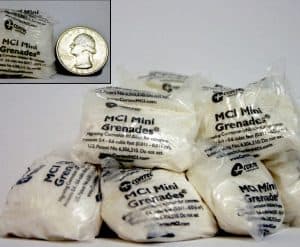
We are pleased to present a new demo video on MCI® Mini Grenades! For 20 years and counting, MCI® admixture has been available packaged in small water-soluble bags for ease of use and convenience. These MCI® Grenades can be added to concrete, repair mortar, and grout mixing water for enhanced corrosion protection. Our new video shows an up-close look at what happens when these pre-dosed pouches come in contact with mix water!

As soon as the MCI® Mini Grenade is added to water, the packaging begins to dissolve, releasing MCI®-2006 NS powder admixture. In real-life applications, the MCI® Mini Grenade contents should be well-mixed with water prior to adding cementitious components to make sure the admixture is distributed throughout the grout, mortar, or ready-mix. Migrating Corrosion Inhibitors in the admixture will form a protective molecular layer on metal surfaces to mitigate rebar rust in concrete and help even out the corrosion potential between the new patch and adjacent concrete.

Each MCI® Mini Grenade contains enough Migrating Corrosion Inhibitors to protect 0.5 ft³ (0.015 m³) of concrete. Regular MCI® Grenades and Metric MCI® Grenades work the same way but contain more admixture for larger volumes (1 grenade/yd³ and 1 grenade/m³, respectively) of concrete or repair mortar. They are ideal for repair projects but also serve as a good corrosion inhibitor backup plan for worst-case admixture scenarios in new concrete pours.

If you have wanted to see an MCI® Mini Grenade pouch dissolve before your eyes, or if you want to introduce your colleagues to the concept of easy admixture dosing and application with MCI®Grenades, this one-minute video is a great way to do so. Watch now: https://www.youtube.com/watch?v=770P6AMvSMY

Keywords: Cortec, MCI, Migrating Corrosion Inhibitors, concrete admixture, concrete repair, MCI Mini Grenades, repair mortars, From Grey to Green, rebar rust, concrete corrosion

For a PDF version please click here.

NEWS ALERT: Watch Cortec’s New CorrVerter® MCI® Rebar Demo Video!

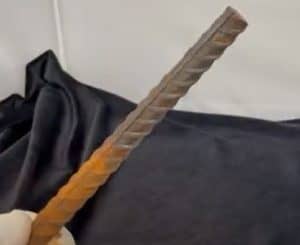
Cortec® is pleased to release a new demo video on how to apply CorrVerter® MCI® to rusty rebar! The demo shows how to transform a piece of rusty rebar into a primed and passivated one, as required for good concrete repair surface prep. It is a great resource to share with engineers, contractors, and anyone involved in concrete construction or restoration.

The two-and-a-half-minute demo video covers basic steps of CorrVerter® MCI® Rust Primer application:
1. Remove loose rust with a wire brush and rinse.
2. Apply CorrVerter
® at ≈9-14 mils (225-350 µm) wet film thickness (WFT).
3. Recoat 20-30 minutes later if needed.
4. Allow to cure 24 hours before placing concrete.
5. Inspect to ensure full coverage and total cure.

A highlight of the video is the time lapse that shows CorrVerter® MCI® turning from white to black as the primer dries over the course of 4-6 hours. In the process, CorrVerter® MCI® is able to passivate existing surface rust and protect against re-rusting, providing a labor-saving alternative to sandblasting for rusty rebar. The most obvious application is rusty rebar surface prep as a convenient alternative to sandblasting prior to concrete repair. However, CorrVerter® MCI® can also be used to passivate new rebar that may have rusted during outdoor storage on the jobsite.

The CorrVerter® MCI® rebar demo is a fun introduction to the workings of CorrVerter® and is a great way to familiarize workers with the application process before using CorrVerter® MCI® out in the field. Watch the demo now to see how it works! https://youtu.be/4GtnllwpdzQ

Keywords: CorrVerter, MCI, rust primer, rusty rebar, how to apply CorrVerter, concrete repair, rusty rebar surface prep, Cortec, alternative to sandblasting, CorrVerter demo

For a PDF version please click here.

NEWS ALERT: Avoiding the Pitfalls of Rusty Rebar with Proper CorrVerter® MCI® Application

Since rusty rebar is often the culprit of concrete deterioration, it must be removed or passivated before concrete repair. Otherwise, serious adhesion or re-rusting problems could cause the repair to fail. The tips below will help contractors avoid some of the pitfalls of rusty rebar and get the most out of CorrVerter® MCI® Rust Primer as a labor-saving alternative to sandblasting.

Keys to Successful Rust Passivation
Before doing any rebar rust treatment, rebar condition must be assessed and dealt with based on rust severity level. If reinforcing bars are too corroded, they may need to be replaced, but if they have enough thickness/integrity remaining, they can be sandblasted or passivated. The latter is much easier but requires attention to the following important details for best results.

1. Check the weather. If applied outdoors, CorrVerter® MCI® should only be applied when it is not raining. The temperature must be 49-90 °F (9.4-32.2 °C), and dew point should be more than 5 °F (2 °C) lower than the ambient temperature.
2. Clean the rebar surface. Use a wire brush to remove any loose rust. Then rinse the surface before coating.
3. Make sure CorrVerter
® MCI® is properly mixed. The product should be stirred to a uniform consistency, usually for two to three minutes before applying.
4. Apply CorrVerter
® MCI® at the recommended wet film thickness (WFT). The goal is to have 3-5 mils (75-125 µm) when dry, which means WFT should be 8.7-14.5 mils (217.3-362.3 µm). Using a WFT gauge to check the coating at the time of application is a good idea whenever possible.
5. Allow CorrVerter
® MCI® to air dry 24 hours before applying the concrete patch to make sure the coating is fully cured.

Post-Application Best Practices
After allowing enough dry time, workers should inspect the CorrVerter
® MCI® for the following points:
• The first thing to check for is total coverage of the rebar by the rust converting primer. Any exposed rebar should be recoated to ensure full protection.
• If possible, the dry film thickness (DFT) should be measured (3-5 mils [75-125 µm] is ideal) and any potentially thin areas where DFT could not be verified should be noted on the inspection report.
• No rust should be bleeding through the CorrVerter
®; otherwise, another coat of CorrVerter® may be needed to make up for insufficient DFT.
• Workers should also look for soft or white milky areas where the coating has not cured and allow further dry time if needed (CorrVerter
® MCI® should be dark brown to black when fully cured).
• Any potential problem areas should be photographed and noted in the inspection report. Capture the Benefits of CorrVerter
® MCI®!

Ultimately, CorrVerter® MCI® is an extremely simple method of surface prep for rusty rebar. It eliminates the extra hassle required for sandblasting and leaves behind a passivated surface that supports good adhesion to the concrete patch material. Follow these guidelines and contact Cortec® for further help avoiding the pitfalls of rusty rebar by proper CorrVerter® MCI® application: https://www.cortecmci.com/contact-us/.

Keywords: rusty rebar, CorrVerter, MCI, alternative to sandblasting, concrete repair, Cortec, rust converting primer, surface prep for rusty rebar, good adhesion to concrete, concrete deterioration

For a PDF version please click here.

NEWS ALERT: MCI® Resilience in Countering Construction Material Shortages

The last two years have been a supply chain roller coaster. In the concrete sector, this surfaced in numerous reports of ready-mixers facing shortages of calcium nitrite or other materials used to enhance concrete durability. The story has been different with MCI® admixtures, which continue to offer a sound and steady solution for corrosion protection and extended service life.

Calcium Nitrite Alternative
MCI
® admixtures are much more than mere calcium nitrite inhibitor (CNI) alternatives. For instance, MCI®-2005 is typically easier to work with than CNI because it does not accelerate set time. It uses a fixed dosage rate and goes beyond inhibiting chloride corrosion to also protect against carbonation induced corrosion. Even better, MCI®-2005 is a USDA Certified Biobased Product and is certified to meet ANSI/NSF Standard 61 for drinking water system components.

Galvanized/Epoxy Coated Rebar Alternative
Contractors have also seen shortages of galvanized and epoxy coated rebar. Although a completely different approach to corrosion than specialty rebars, using MCI
® admixtures can be a great alternative because they typically offer cost savings in addition to meeting corrosion protection and service life requirements. They also preclude corrosion concerns that arise when the protective layer on galvanized or epoxy coated rebar is chipped.

Pozzolan Alternative
Another construction material in shortage has been pozzolans such as fly ash. While one goal of pozzolans is to help meet strength requirements, the other is to meet durability criteria including protection against corrosive attack. Ready-mix suppliers can adjust various parts of the mix design (e.g., water-cement ratio) to help make up for the first concern, while MCI
® admixtures can be used for the latter durability concern by inhibiting corrosion.

A Reliable Supply for Ready-Mixers
Amid the uncertainty of today’s market, MCI
® admixtures have remained a strong source of corrosion protection for ready mixers and a sound alternative to other materials commonly used to extend concrete service life. Whether you find yourself facing a material shortage or simply looking for a practical/economical corrosion solution for your concrete structure, contact Cortec® Corporation to learn more about specifying MCI® as a corrosion inhibiting admixture: https://www.cortecmci.com/contact-us/

Keywords: calcium nitrite shortage, supply chain shortages, MCI admixtures, calcium nitrite alternative, epoxy coated rebar alternative, construction material shortages, corrosion protection, MCI, Cortec, extend service life

For a PDF version please click here.

NEWS ALERT: How to Mitigate Rebar Corrosion in Precast Concrete

Precast concrete is a high-quality building material with countless uses: for bridges, parking ramps, light poles, culverts, prefab houses, tanks, and much more. Since precast concrete is made and cured in a controlled environment, it has a low risk of corrosion vs. cast-in-place concrete. That is . . . until cracking occurs, as can often happen during transportation. Once cracks form, corrosives can enter and additional freeze-thaw cracking can occur, leading to long-term corrosion damage. Fortunately, Cortec® MCI® is an easy way to arrest corrosion and extend service life at any stage in the precast concrete lifespan.

MCI® Admixtures for New Precast Elements
Although many engineers understandably see no need to add corrosion inhibitors to the precast concrete mix, this is the best place to do so to minimize future problems when long service life is desired. Admixtures such as 
MCI®-2005 NS do not negatively affect the ready-mix. They introduce Migrating Corrosion Inhibitors that form a protective molecular layer on the surface of metal reinforcement, delaying time to corrosion and reducing corrosion rates once started. Precast elements that contain an MCI® admixture are already prepared to fight corrosion if cracking occurs from normal wear and tear in transit.

MCI® SACIs for Existing Precast Elements
While the use of MCI
® admixtures is ideal, sometimes it is difficult to convince decision-makers that another product is needed until the problem becomes obvious. Conveniently, MCI® comes in multiple forms that can be applied even after concrete elements are cast. For example, an excellent response to finding cracks on precast bridge segments stored at the construction site is to apply an MCI® SACI (surface applied corrosion inhibitor). MCI®-2020 offers the highest concentration of Migrating Corrosion Inhibitors that penetrate into concrete and eventually make their way to the reinforcing steel. The addition of a water repellent helps seal the MCI® in and corrosives out. Another option is to apply a twoin-one MCI® water repellent such as MCI®-2018. This SACI combines Migrating Corrosion Inhibitors with a 100% silane water repellent that guards against the intrusion of water, chlorides, and carbonation. 

MCI® for Precast Concrete Repair
Sometimes, corrosion has already gone so far that precast concrete elements must be repaired. MCI
® Technical Sales and Product Manager, Ash Hasania, found this to be the case when he encountered a client with deteriorating concrete light poles that were more vulnerable to corrosion because of old, poor quality concrete cast in a slender design. MCI®-2023 was used to re-passivate rusted rebars. MCI® Mini Grenades were added to the ready-mix for the new concrete patches. Once the concrete cured, surfaces were treated with MCI®-2020 and MCI®-2018 for additional corrosion protection. Going forward, the customer began adding MCI®– 2005 to the light poles during casting.

Precast and Prevent with MCI®
Precast concrete is everywhere: along the road, under the ground, and sometimes even at home. In spite of the quality advantages of precast concrete vs. cast-in-place concrete, prefab elements still face corrosion risks as a result of cracking and other issues. MCI® offers a simple solution to extend the service life of precast concrete early or late in the process.

Contact Cortec® MCI® to learn more about fortifying your precast concrete structures with Migrating Corrosion Inhibitors: https://www.cortecmci.
com/contact-us/

Keywords: precast concrete lifespan, precast concrete vs cast in place, extend service life of concrete, MCI, Migrating Corrosion Inhibitors, From Grey to Green, Cortec, how precast concrete is made, admixtures, rebar corrosion in concrete

For a PDF version please click here.

NEWS ALERT: Four Great Reasons to Attend World of Concrete 2023!

Calling all MCI® reps and distributors!!! It is that time of year again!

With construction season winding down and January fast approaching, it is not too early to start planning your visit to the World of Concrete 2023! Here are + four not-to-miss opportunities for Cortec® MCI® reps and distributors next January 16th-19th in Las Vegas:

1. Take advantage of one-on-one time with your Cortec® MCI® rep (contact your rep to secure a time slot now).
2. Grow your concrete repair network and have fun at the Monday night ICRI kick-off event.
3. Catch up, connect, and be inspired at our MCI
® rep meeting (ask about MCI® repair mortar updates and testing).
4. Enjoy our invitation-only fun activity for MCI
® reps and distributors!

You are also welcome to simply hang out with the MCI® team at Booth #S10856 during exhibit hours Tuesday through Thursday (January 17th-19th), or explore the grounds to check out the wealth of educational resources and networking opportunities at your fingertips during the only annual international event dedicated to commercial concrete and masonry industries!

Contact your rep today to schedule a one-on-one: https://www.cortecmci.com/contact-us/

Get registered with ICRI promo code A36: https://www.compusystems.com/servlet/ar?evt_uid=130&promocode=A36

World of Concrete 2023
January 17
th– 19th, 2023 (Exhibits)
Las Vegas Convention Center
Las Vegas, NV
Booth # S10856
www.worldofconcrete.com

Keywords: WOC2023, World of Concrete, Cortec MCI, reasons to attend WOC, ICRI, From Grey to Green, construction industry, MCI repair mortars, concrete repair

For a PDF version please click here.

NEWS ALERT: From Concrete Repairs to Clays and Cornhole – Cortec® MCI® Enjoys Fall ICRI!

Convention, November 7th-9th in Atlanta, Georgia. This outstanding networking venue brought together a wide range of attendees—from students curious about how MCI® works to engineers looking for answers on specific projects. One common question asked at the booth was whether MCI® surface applied corrosion inhibitors (SACIs) could compensate in repairs where corrosion inhibitors had not been added to the ready-mix due to an oversight. Another engineer looking for help on a specific project has already been working to specifying MCI®– 2020 after a discussion with Ash Hasania (MCI® Technical Sales & Product Manager).

Not all time was spent at the booth, as Jessi Meyer, Ash Hasania, Kevin Quan, and Lisa Marston played an important role in committee meetings— sometimes as observers, sometimes as full committee members. Ash was a delegate to the ICRI chapters meeting, which shared many interesting ideas to encourage future chapter growth. We were also represented at the “Women in ICRI,” “Life Cycle and Sustainability,” and “Corrosion” committee meetings. Technical sessions gave MCI® team members another chance to build their understanding of everything from repair assessments after catastrophic events to mid-century modernist concrete façade repairs. An awards luncheon topped off the educational aspect with great case histories on award-winning repair projects!

The convention was not complete without some time to unwind and build relationships in a recreational setting. Highlights included clay shooting, a dinner social, and even a cornhole tournament. All in all, it was a great time to learn and collaborate with key players in the industry. Special thanks to those of you who stopped by our booth! If you missed us or have further questions, contact us here: https://www.cortecmci.com/contact-us

Keywords: how MCI works, surface applied corrosion inhibitors, SACI, MCI-2020, ICRI Fall Convention, From Grey to Green, concrete façade repairs, concrete repair, Cortec, MCI

For a PDF version please click here.

NEWS ALERT: Join Us to Learn About Using MCI® in Extraordinary Concrete Repairs!


Calling all concrete contractors, engineers, and MCI® representatives! We invite you to meet us next month in Atlanta, Georgia, for the 2022 ICRI (International Concrete Repair Institute) Fall Convention. Jessi Meyer (VP of Technical & Product Sales), Ash Hasania (MCI® Technical Sales & Market Manager), and Kevin Quan (MCI® Regional Sales Manager, East Coast) will all be on hand from our MCI® Team to answer MCI® concrete repair questions, reconnect, and simply enjoy time together at our tabletop booth and ICRI social events.

The theme for this convention is “Fire, Impact, Blast: Repairs After Extraordinary Events.” In addition to the insights we’d be happy to share with you from our own experiences in concrete repair, a full schedule of technical sessions is planned, including opportunities not only to learn from industry experts but also to earn PDH credits in the process. You can also get more involved by attending ICRI committee meetings and observing the process to see if you would like to have a more direct role in the future. Best of all, the ICRI Fall Convention is a great way to expand your network and make invaluable new friendships in the concrete repair industry that will be mutually beneficial for years to come.

Mark your calendars and register today!
2022 ICRI FALL CONVENTION
November 7-9, 2022
InterContinental Buckhead Atlanta
3315 Peachtree Road NE
Atlanta, Georgia
https://www.icri.org/page/2022-fall-conv-home

Keywords: concrete repair, Cortec MCI, From Grey to Green, ICRI Fall Convention, PDH credits, construction industry, MCI rep

For a PDF version please click here.

NEWS ALERT: MCI® Guide to Corrosion Protection During Construction Delays


Construction delays are common and often unpredictable. Winter weather, budget constraints, material delays, and leadership changes are all factors that can  interrupt the original timeline of a construction project. Unfortunately, delaying a project does not mean the elements of nature stand still. One of the serious problems of construction delays is that materials left out in the open may begin to deteriorate through corrosion. Cortec® suggests the following guidelines to avoid some of these common corrosion problems.

Post Tensioning Grouting Delays

When the weather gets too cold to grout PT (post-tension) ducts, or when other interruptions halt the process for two weeks or more, it is important to protect against corrosion on PT strands. Fogging PT ducts with MCI®-309 is one of the most logical options to do so. This powder-based Migrating Corrosion Inhibitor™ vaporizes and forms a protective molecular layer on metal surfaces within the enclosed space. Better yet, MCI®-309 does not have to be flushed out before grouting, making this method of PT strand protection extremely efficient and convenient.

Construction Materials Left Out in the Open

When a construction delay hits, some building materials and tools are almost inevitably left out in the open. Piles of unprotected rebar are a common sight. Even worse, half-finished concrete structures with partially installed, partially exposed rebar present a special challenge for structural preservation. Tools and various other steel building materials may also be left sitting outside at risk for weathering.

MCI® CorShield® is an outstanding protective coating for new and partially installed reinforcing metal. It can be sprayed on and left to cure into a soft non-tacky film that eventually hardens and provides short- to medium-term protection against corrosion in unsheltered outdoor environments. For ultimate convenience, MCI® CorShield® has been tested for steel bond strength in accordance with ASTM A944-99 and does not have to be removed prior to embedding in concrete.

Other steel building materials lying out in the open can be wrapped in MCI® Construction Film for protection. The advantages of MCI® Construction Film go beyond the simple physical barrier benefits of using a tarp, because the film creates a molecular corrosion inhibiting layer on enclosed metal surfaces. MCI® Construction Film is good for protecting tools or equipment, especially those sitting in harsh coastal environments at higher risk for attack from airborne chlorides.

Damage Control at the End of a Delay

Anything can happen during a construction delay. Even a site left perfectly pristine and orderly may be disheveled and dirty when the job starts up again. Oil may have leaked or spilled onto new concrete surfaces and need to be cleaned up before applying a coating system or a waterproofing membrane to finish the project. If this is the case, MCI®-2061 or MCI®– 2062 are two excellent cleaners/degreasers that make use of biodegradable surfactants and good bacteria to tackle grease stains. The longer these products are left to sit, the more time microorganisms in the cleaning solutions will have to digest the grease compounds in the stain. Theoretically, this means the stain will get cleaner as time goes on (the product can be left to sit for one hour or overnight if needed). The components work in synergy: cleaning agents lift and disperse the waste while enzymes and microorganisms from MCI®– 2061 and MCI®-2062 digest hydrocarbons and other organic wastes, respectively.

When the issue is rebar rust from lack of protection during the delay, CorrVerter® MCI® Rust Primer should be used to passivate any visible corrosion on unused or partially exposed steel reinforcement. Workers should also examine partially built reinforced concrete structures for signs of corrosion, and, if any are found, should seek to mitigate the problem by treating the concrete with a surface applied corrosion inhibitor such as MCI®-2020 or MCI®-2018 to slow the rate of any corrosion that has begun.

Be Prepared for the Inevitable

Whatever the reason, construction delays are sure to happen. However, they should not be allowed to destroy sound construction materials or deteriorate partially finished structures. Following the preceding guidelines can go a long way toward preventing corrosion and minimizing damage and loss that could otherwise occur during a construction delay. Contact Cortec® to discuss these options further: https://www.cortecmci.com/contact-us/

Keywords: rebar rust, concrete surface, corrosion protection, construction delays, MCI, From Grey to Green, grouting delays, surface applied corrosion inhibitor, concrete oil stains, Cortec

For a PDF version please click here.

NEWS ALERT: MCI®-2061 Test Demo Builds Confidence in ‘Green’ Cleaner for Oil-Stained Concrete

June 2, 2021


There are always plenty of reasons and opportunities to remove gas and oil stains from concrete. For instance, concrete driveways, garages, and bridges are often the victims of vehicle gas and oil leaks. In addition to dealing with the bad appearance, contractors must make sure concrete surfaces are thoroughly clean and free of all contaminants before applying a waterproofing membrane. A recent test demonstrates MCI®-2061 in action under the microscope and builds confidence in this “green” cleaning product for concrete oil stains.

How Green Cleaners Work

MCI®-2061 works by a dual mechanism. Biodegradable surfactants disperse oil droplets and perform the initial cleaning. If properly applied, MCI®-2061 spores then germinate into active microorganisms and perform secondary cleaning by actually digesting hydrocarbons. This activity increases as time goes on. In fact, spores that remain in the substrate after rinsing may continue to degrade residual hydrocarbons that were not removed in the initial cleaning process.

MCI®-2061 Efficacy Demonstration

To demonstrate surfactants and microorganisms at work in MCI®-2061, the product is typically applied to a small area, and before-and-after results are compared to validate the cleaning efficacy. However, the easiest and fastest way to show decomposition of organic matter is to measure COD (chemical oxygen demand) reduction in a sample. To demonstrate this, three samples of MCI®-2061 were prepared for testing of biodiesel digestion. All samples were diluted with water at a ratio of 1:100 and were also examined under the microscope.

Sample #1 (control) – MCI®-2061 without bacteria or biodiesel
Sample #2 (control) – MCI®-2061 without bacteria but with biodiesel added
Sample #3 – MCI®-2061 with bacteria and biodiesel


Sample ID COD t=0 (mg/L) COD t=1 week (mg/L) COD reduction (mg/L) COD Reduction %
MCI®-2061 NB Control 17,040 17,760 720 +4.23%
MCI®-2061 NB 22,780 23,080 300 +1.32%
MCI®-2061 21,760 13,900 -7860 -36.12%


COD, a measure of contaminants in the solution, dropped by 36.12% over this timeframe, while COD increased slightly in the two control samples not seeded with bacteria.

For a PDF version please click here.